Skills, choice and opportunity: insights on the future of education and apprenticeships
City & Guilds’ Head of Funding and Policy, Bryony Kingsland, shares her perspective on post-16 reform, apprenticeships and the UK's future skills needs.
07 October 2026
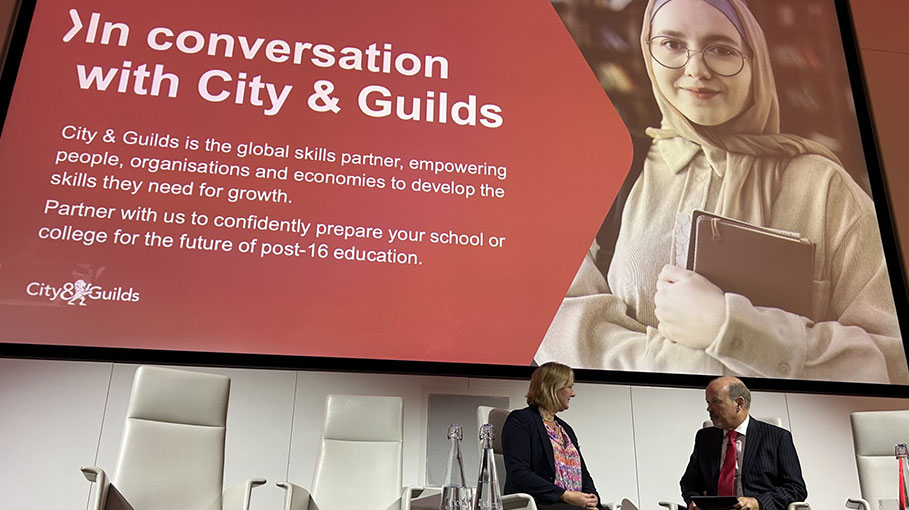
The future of post-16 education must be built on clearer pathways, stronger employer engagement and genuine choice for learners, according to Head of Funding and Policy at City & Guilds, Bryony Kingsland, speaking with education commentator Martin Birchall and host of the National Sixth Form Careers Summit 2026.
The event brings together careers leaders, employers and education experts to explore developments in education and employment pathways for young people. The discussion examined some of the key challenges facing the sector, including rising numbers of young people not in education, employment or training (NEET), reforms to post-16 qualifications and the role of apprenticeships in addressing the UK's skills shortages.
Reflecting on the anticipated recommendations in the Milburn review, Bryony highlighted the importance of ensuring that young people have access to opportunities that lead directly to meaningful careers.
"Work experience isn't just an add-on. It's one of the strongest predictors of a young person getting a job and staying in a job."
She noted that work experience remains a crucial factor in improving employment outcomes, but that many employers, particularly SMEs, face practical barriers when it comes to offering placements and apprenticeship opportunities.
"We're a nation of entrepreneurs, which is one of our strengths," she explained. "But many smaller businesses need more support to engage with work experience and apprenticeships. If we're serious about tackling youth unemployment, we need to make participation easier."
"Work experience isn't just an add-on. It's one of the strongest predictors of a young person getting a job and staying in a job."
A changing post-16 landscape
The conversation also turned to the significant reforms taking place across the education system. With Applied General qualifications being de-funded and replaced over time and new technical pathways emerging, Bryony acknowledged that navigating post-16 options can often feel overwhelming for learners and parents alike.
"For too long, the post-16 landscape has been complex and confusing. Young people need clearer choices."
New technical qualifications, such as V Levels, which will sit alongside T Levels, and Higher Technical Qualifications (HTQs) combined with the Lifelong Learning Entitlement funding, are intended to provide learners with a broader range of progression routes that are accessible.
The objective, she argued, should not be to promote one pathway over another, but to ensure that every learner can find the route that best suits their ambitions and learning style.
"Success shouldn't be measured by whether someone goes to university. Success is finding the pathway that helps someone thrive."
While universities continue to play a vital role, she emphasised that many young people are looking for alternatives that combine technical learning, practical experience and progression opportunities without necessarily following a traditional degree route.
Meeting the UK's skills challenge
Employer demand was another recurring theme throughout the discussion.
Drawing on conversations with employers involved in Local Skills Improvement Plans across England, the policy expert pointed to a consistent message being heard across sectors.
"Across the country, employers are telling us the same thing: they need more technical and employability skills." From engineering and construction to energy, technology and AI-related occupations, organisations are increasingly concerned about how they will replace experienced workers approaching retirement.
These are themes we explore in our recent report, Counting the cost: the UK’s employability skills crisis, which showed the importance of skills such as communication, adaptability, teamwork and problem-solving in an increasingly complex labour market. It's clear that while technical skills remain vital, employers are also increasingly placing value on the human capabilities that help people navigate change, collaborate effectively and continue learning throughout their careers. The discussion highlighted the need for a new generation of skilled workers to fill these roles, while recognising that distinctions between academic and vocational education are becoming less relevant in an economy that increasingly values technical expertise.
Bryony emphasised that technical and vocational education should continue to move towards genuine parity with academic routes.
"There isn't one route to success. There are parallel pathways that can lead to equally rewarding outcomes."
Lessons from apprentices who chose a different route
Alongside the discussion, four apprentices shared practical advice for young people considering apprenticeship pathways. While their experiences varied, several common themes emerged: building confidence, gaining experience wherever possible and preparing thoroughly for applications.
The apprentices stressed that employability skills can be developed through a wide range of activities, from part-time jobs and volunteering to clubs, leadership roles and public speaking opportunities. These experiences not only build confidence but also provide valuable examples to draw on during interviews and assessment centres.
The panel also challenged misconceptions that apprenticeships are an easier alternative to university. Several described how securing apprenticeship offers actually motivated them to raise their academic performance, while balancing demanding professional and study commitments.
The discussion reinforced the value of considering the full range of apprenticeship opportunities. While degree apprenticeships continue to attract significant interest, higher and lower-level apprenticeships can also provide strong progression routes into long-term careers, with many employers supporting learners to advance through levels over time.
"Every young person deserves a pathway that matches their talents, aspirations and way of learning."
Looking ahead
As government reforms continue to reshape technical education and apprenticeship changes, which we welcome as strengthening the role of vocational education and access to it, the need for clearer information, stronger employer engagement and greater flexibility still remains evident.
For Bryony, the answer lies in creating a system that values all forms of learning and recognises the different aspirations of learners. "Every young person deserves a pathway that matches their talents, aspirations and way of learning."
Ultimately, the discussion revealed a shared belief among educators, employers and apprentices themselves: the future of skills is not about choosing between academic and technical education. It is about ensuring that every learner has access to high-quality opportunities that lead to meaningful careers, lifelong success and the UK’s future skills needs.
You may also be interested in